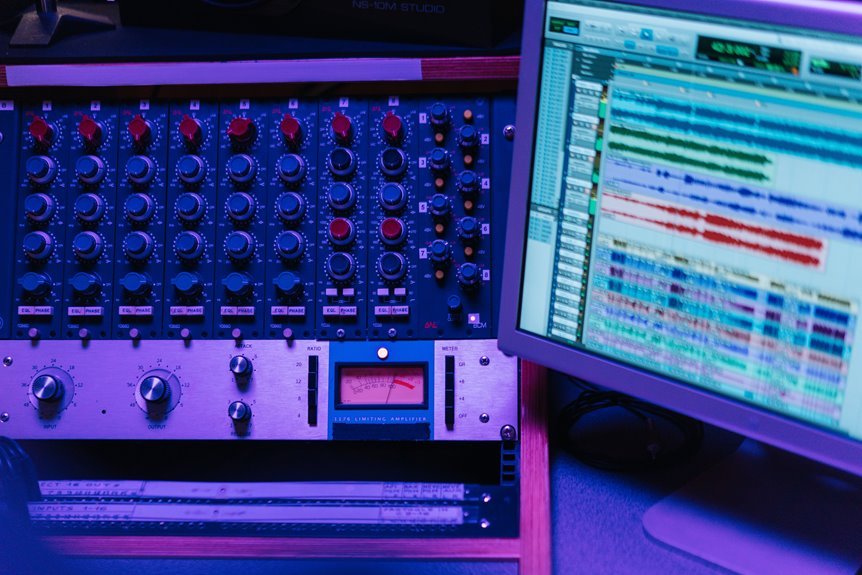
NebulaTrack Spectrum Console – 3049746737, 7252310375, 3513576796, 6317635834, 7866536484

NebulaTrack Spectrum Console presents a scalable, modular platform with centralized spectral calibration and automated checks across its five model identifiers. Each variant balances display-oriented and interactive capabilities while weighing power efficiency against performance, enabling repeatable experiments and traceable workflows. The collection offers disciplined evaluation and clear upgrade paths, yet concrete guidance on selecting the appropriate model remains nuanced. Stakeholders will need to compare real-world outcomes and compatibility with their workflows to progress.
What NebulaTrack Spectrum Console Offers Across Models
The NebulaTrack Spectrum Console family offers a range of capabilities across models, balancing processing power, sensor integration, and user workflow.
Across variants, NebulaTrack performance demonstrates scalable compute, modular interfaces, and robust data handling.
Spectral calibration remains central, with consistent procedures, traceable accuracy, and automated checks.
Flexibility supports diverse workflows, yet preserves interoperability, enabling disciplined experimentation and freedom within structured assessment and repeatable results.
Side-by-Side of the 3049746737, 7252310375, 3513576796, 6317635834, 7866536484
Across the five model identifiers—3049746737, 7252310375, 3513576796, 6317635834, and 7866536484—the side-by-side comparison highlights distinct yet overlapping capabilities in compute, sensor integration, and workflow ergonomics.
The evaluation emphasizes display only vs interactive modes and power efficiency vs performance, revealing nuanced trade-offs.
Findings support evidence-based judgments without prescriptive bias, aligning with user autonomy while clarifying practical implications for diverse workstyles.
How to Choose the Right Console for Your Workload
Choosing the right console depends on aligning workload requirements with device capabilities. Analysts compare throughput, latency, and scalability to determine fit. Data compatibility ensures seamless integration with existing pipelines and formats, while power efficiency affects sustained operation and thermal margins. Objective evaluation favors modular configurations, clear upgrade paths, and measurable performance metrics over speculative claims. Optimal choice balances flexibility, reliability, and total cost of ownership.
Real-World Use Cases: Field Deployments vs. Lab Benches
Field deployments and lab bench setups illustrate contrasting operating environments that shape console performance and workflow integration. Real-world field deployment demands rugged interfaces, offline capabilities, and rapid data fusion, whereas the lab bench emphasizes precision calibration, repeatable measurements, and controlled conditions.
Evidence shows field use prioritizes resilience; lab environments prioritize accuracy, documentation, and experiment repeatability. Researchers weigh flexibility against stability for optimal outcomes.
Frequently Asked Questions
What Are Maintenance Intervals for Each Console Model?
Maintenance intervals vary by model, with each NeulaTrack unit requiring periodic checks and firmware compatibility verification. The recommended cadence—documented per model—ensures optimal performance, reliability, and compatibility with current firmware; adherence supports evidence-based operational freedom and stability.
Can Nebulatrack Spectrum Integrate With Existing Lab Systems?
NebulaTrack Spectrum can integrate with existing lab systems, though integration latency and data normalization vary by interface. Current assessment highlights compatibility concerns, requiring careful system integration planning to ensure seamless data flow and interoperability across platforms.
Do All Models Support Remote Firmware Updates?
Remote firmware updates are not universally supported across all models; some provide staged deployment, while others require manual intervention. Allegorically, a tuning fork hums—acoustic noise signals readiness, but consistency depends on architecture and update governance.
Are There Hidden Costs for Extended Warranty Options?
There are potential hidden costs associated with extended warranty plans, depending on coverage specifics and service terms. Thorough analysis indicates hidden costs may arise from deductibles, upgrade fees, or limited component coverage, affecting total ownership value.
How Do Models Differ in Acoustic Noise Levels?
Model acoustics discussions show that different models vary primarily in fan design and enclosure damping, leading to distinct noise level comparisons; the differences are measurable, consistent, and bound to operational load, temperature, and vibration control strategies.
Conclusion
The NebulaTrack Spectrum Console family enables scalable, repeatable spectral workflows with clear upgrade paths and automated checks. Across models, combinations of display-only and interactive modes balance power and efficiency, aligning with field deployments and lab bench needs. A key objection—cost versus capability—is mitigated by modular interfaces and traceable calibration procedures that reduce rework. In short, these consoles support disciplined experiments, enabling evidence-based decisions while adapting to diverse workloads and stakeholder goals.